
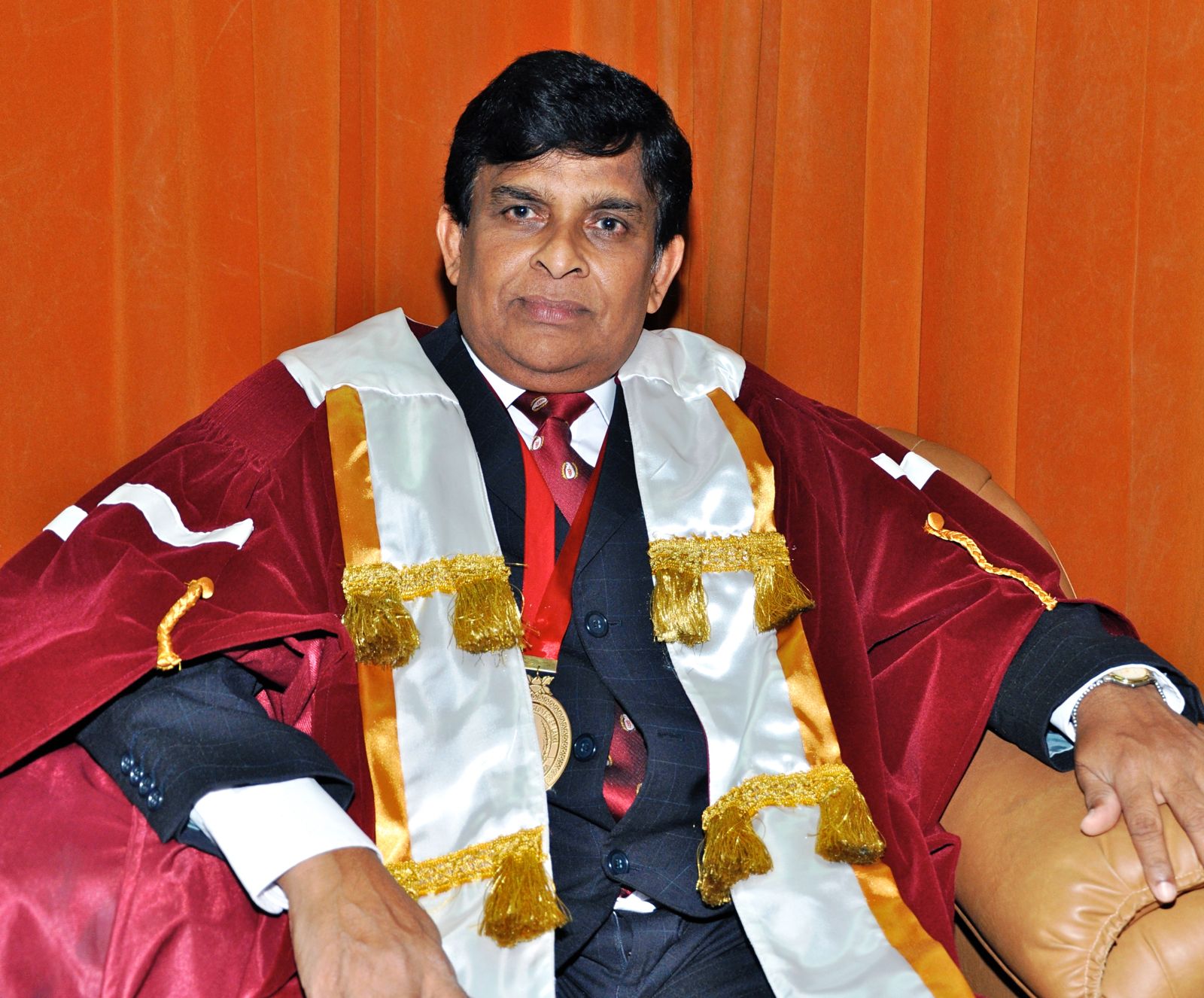
Dr. K. L. Fernando MBBS,FRCS, FCSSL
Diploma in Archaeology, Certificate in Epigraphy and Ola Leaf Manuscripts
My life has been guided by two simple beliefs. The first is that important discoveries often begin by asking questions that others have overlooked. The second is that the free education I received in Sri Lanka placed upon me a lifelong obligation to give something back to my motherland. Having received this invaluable gift, I have always felt a deep personal responsibility to contribute in whatever way my abilities would allow. Throughout my career as a surgeon, a teacher, and now an archaeologist, that enduring sense of curiosity, gratitude, and service has been the guiding force behind everything I have sought to accomplish.
My professional career began in surgery. After completing my surgical training in the United Kingdom, I returned to Sri Lanka in 1992 with a determination to introduce minimally invasive surgery to the country.
On 1 June 1992, while serving as Senior Lecturer in Surgery at the North Colombo Medical College, Ragama, I performed Sri Lanka’s first laparoscopic cholecystectomy, marking the beginning of laparoscopic surgery in the country.
Over the following years, I remained closely involved in developing this new discipline. In 1994, I delivered the prestigious A. M. de Silva Oration, presenting the results of the country’s first 81 laparoscopic cholecystectomy cases, demonstrating that the technique had become a safe and practical alternative to open surgery.
My interest gradually shifted from introducing a new operation to building a sustainable training programme. In 2009 I personally designed and constructed ten low-cost laparoscopic simulators, enabling surgical trainees throughout Sri Lanka to practise essential skills outside the operating theatre. These trainers formed the basis of numerous hands-on workshops conducted for registrars and senior house officers.
Following seventeen years of service on the Council of the College of Surgeons of Sri Lanka, I was elected President in 2011. During my presidency, I established the College’s first dedicated Laparoscopic Skills Centre, providing a permanent facility for simulation-based surgical training. The centre was subsequently named the Dr. K. L. Fernando Skills Centre.
Although now retired from full-time clinical practice, I continue to conduct laparoscopic skills workshops for surgical trainees and remain committed to improving surgical education in Sri Lanka.
The second chapter of my life began unexpectedly during the COVID-19 lockdown. Like many others, I suddenly found myself with time to reflect. I turned to the collection of books, maps, and historical material that I had accumulated over many years. As I read more deeply, I became increasingly aware of numerous inconsistencies between the accepted historical interpretations and the evidence preserved in early literary and archaeological sources. The questions that arose from these observations convinced me that I needed formal training in archaeology. This led me to enrol in the Postgraduate Diploma in Archaeology at the Postgraduate Institute of Archaeology, University of Kelaniya, which I completed in 2022. Further studies in epigraphy and ola leaf manuscripts followed, opening an entirely new field of research.
What started as an academic curiosity soon developed into a multidisciplinary investigation into the historical geography of early Buddhism. By combining archaeology, pre-Christian Brāhmī inscriptions, early Buddhist literature, ancient measurements, hydrology, and landscape analysis, I began exploring questions that had remained unresolved for generations.
Over the past several years this work has developed into an ongoing research programme centred on reconstructing the geography of early Buddhist Sri Lanka through converging archaeological, inscriptional, and textual evidence. The findings have been presented at national and international conferences and continue to evolve through scholarly discussion and publication.
This website records that journey, from surgery to archaeology, and shares the ideas, discoveries, and evidence that have shaped it.
My hope is that this work, whether in surgery or archaeology, contributes in some small measure to the country that gave me so much.
 Antiquity Recalibrated